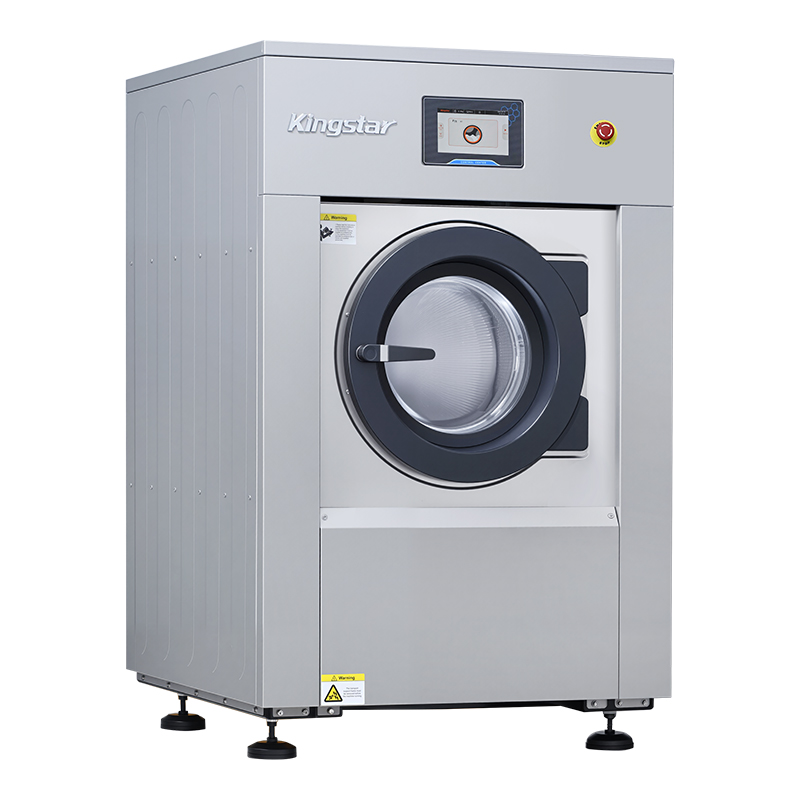
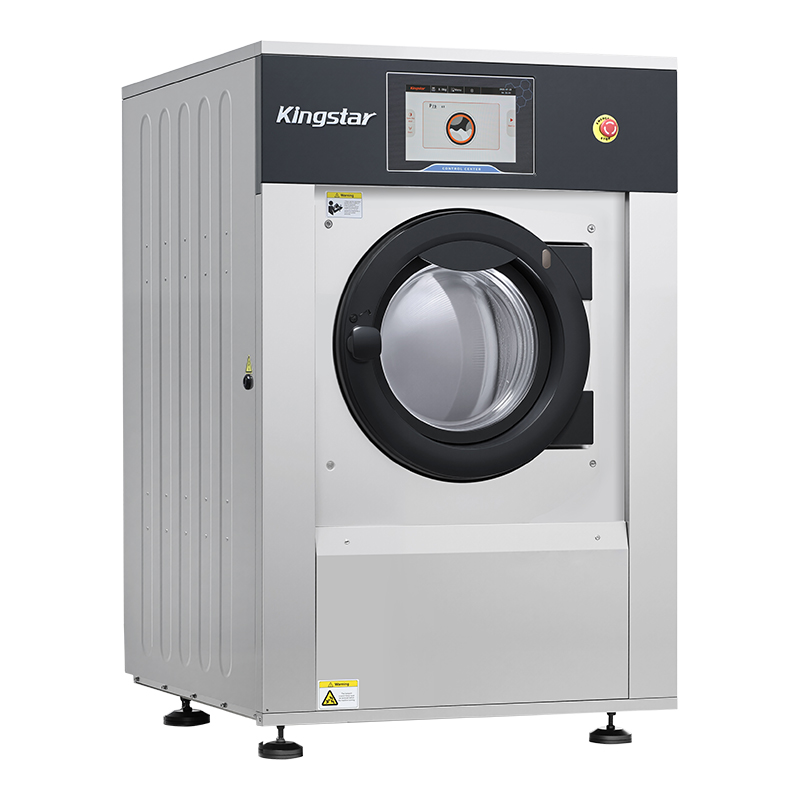
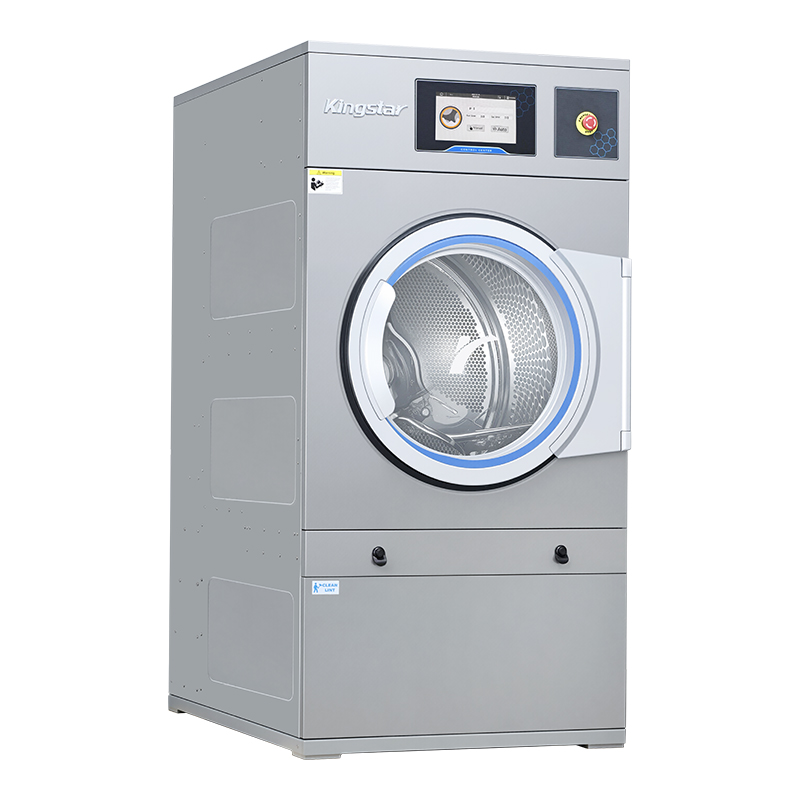
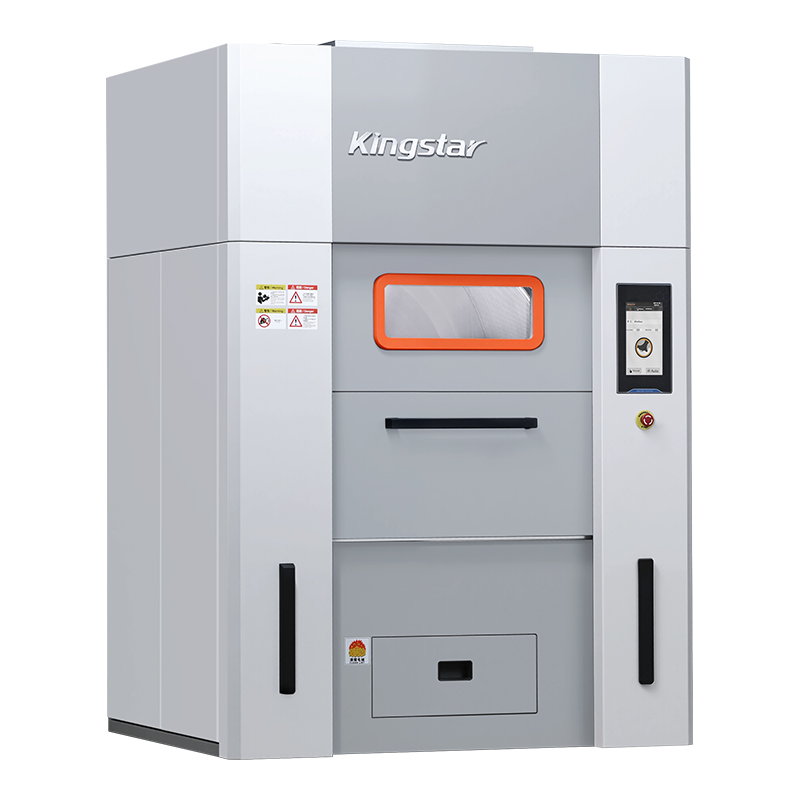
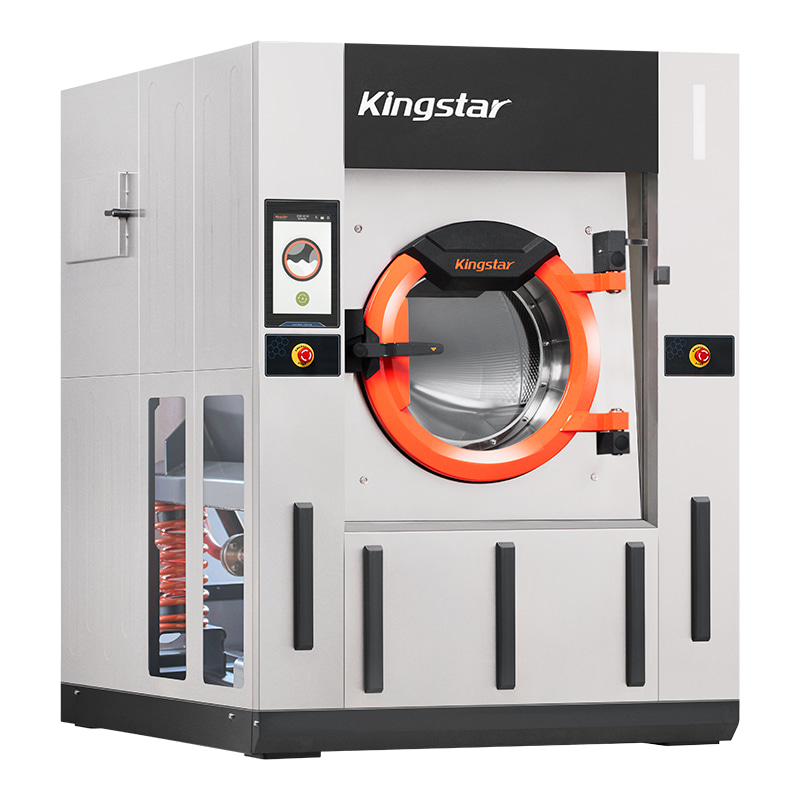
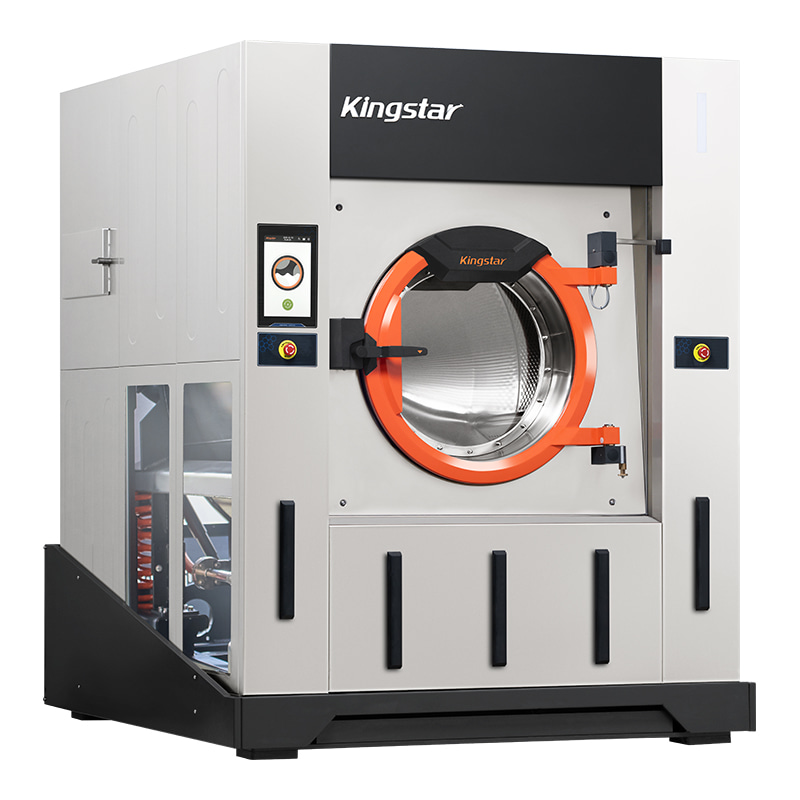
Drum capacity gets the most attention when comparing laundry machinery , but extraction G-force is the figure that determines how much water remains in fabric after the spin cycle, which directly controls how long the next drying stage takes. A washer extractor spinning at 200G leaves noticeably more residual moisture than one reaching 350G, and that difference compounds across every load run afterward.
2026 industrial-grade machines increasingly push past 300G on rigid-mount frames bolted to reinforced concrete pads, while soft-mount models, designed to run without special foundation work, typically top out lower due to vibration limits inherent in their suspension design.
| Faktor | Rigid Mount | Soft Mount |
| Max extraction G-force | Typically 300G to 400G | Typically 100G to 200G |
| Installation requirement | Reinforced concrete foundation required | Standard floor, no special foundation |
| Vibration during spin | Higher, contained by the foundation | Minimal, absorbed by internal suspension |
| Best facility type | Ground-floor industrial laundry plants | Upper-floor or standard commercial buildings |
Facilities upgrading laundry machinery in 2026 without existing reinforced foundations often default to soft-mount units purely due to installation cost, even though this sacrifices roughly 100 to 150G of extraction force compared to what a rigid-mount unit of the same drum size could achieve.
Fits hotels, gyms, and small healthcare facilities processing moderate daily loads without needing continuous operation.
Common in hospital laundries and mid-size hospitality groups running multiple cycles per shift.
Built for centralized laundry plants and textile rental services running near-continuous multi-shift operation.
Oversizing capacity is a common and costly mistake. A facility running partial loads in an oversized drum wastes water and energy per garment processed, since most washer extractor programs are calibrated for near-full loads to reach proper mechanical action.
Water reuse tanks capture rinse water from one cycle and route it into the wash stage of the next load, cutting total fresh water draw substantially across a full day of operation. This feature has moved from a premium add-on to a near-standard expectation in 2026 as water costs and regulatory pressure on commercial water use have both increased in many regions.
Advanced controllers also log cycle data, including water temperature, chemical dosing, and extraction speed, which facility managers use to identify underperforming machines before a full breakdown occurs, shifting maintenance from reactive to predictive.
| Cycle Stage | Typisk andel av totalt energibruk | Main Driver |
| Wash stage | 25-35% | Vannoppvarmingstemperatur |
| Spin/extraction stage | 10-15% | Motor power to reach target G-force |
| Drying stage | 50-60% | Gjenværende fuktighet kommer inn i tørketrommelen |
Because drying consumes the largest share of total energy, improving extraction performance even modestly has an outsized effect on total facility energy use, since every percentage point of residual moisture removed at the spin stage is moisture the dryer no longer has to evaporate using far more energy-intensive heat.
LEGG TIL:No.388 Xinggang Road, Chongchuan-distriktet, Nantong City, 226000, Jiangsu-provinsen, Kina.
Telefon: +86-13917089379
Tlf:+86-13917089379
Faks:+86-0513-85663366
E-mail:[email protected]
Informasjonskapsler gir deg en personlig opplevelse, Сookie-filer hjelper oss med å forbedre opplevelsen din ved å bruke nettstedet vårt, forenkle navigering, holde nettstedet vårt trygt og hjelpe oss med markedsføringstiltak. Ved å klikke på "Godta", godtar du lagring av informasjonskapsler på enheten din for disse formålene. Klikk "Juster" for å justere innstillingene dine for informasjonskapsler. For mer informasjon, se våre retningslinjer for informasjonskapsler.